Both give you coffee in seconds without a machine, but they're made differently and taste different. Instant coffee is brewed coffee that's been dried into powder or granules. Coffee concentrate is strong liquid coffee that you pour and dilute. Here's how they compare.
At a glance
Instant coffee | Coffee concentrate | |
|---|---|---|
Form | Powder or granules | Liquid |
How it's made | Brewed, then spray-dried or freeze-dried | Brewed strong and kept as a liquid |
How you use it | Dissolve in hot water or milk | Pour into hot or cold milk or water |
Cold drinks | Needs whisking or a little hot water first | Mixes straight into cold milk |
Taste | Often flatter, sometimes bitter | Closer to freshly brewed coffee |
Shelf life | Long, if kept dry | Months unopened; fridge after opening |
Measuring | Teaspoons, varies cup to cup | Spoon or pump, same every time |
How instant coffee is made
Coffee is brewed in large batches, then the water is removed. Spray-dried instant is sprayed into hot air, which leaves fine powder. Freeze-dried instant is frozen and dried under vacuum, which leaves granules and keeps a little more flavour. Drying removes much of the aroma, which is why many instant coffees taste flat. Many instant blends also use Robusta beans or chicory to keep the cost down.
How coffee concentrate is made
A concentrate is coffee brewed much stronger than a normal cup, then kept as a liquid instead of being dried. You add milk or water to bring it to drinking strength. Because it's never dried, more of the coffee's aroma and body stays in the cup.
Which tastes better in Indian coffee drinks
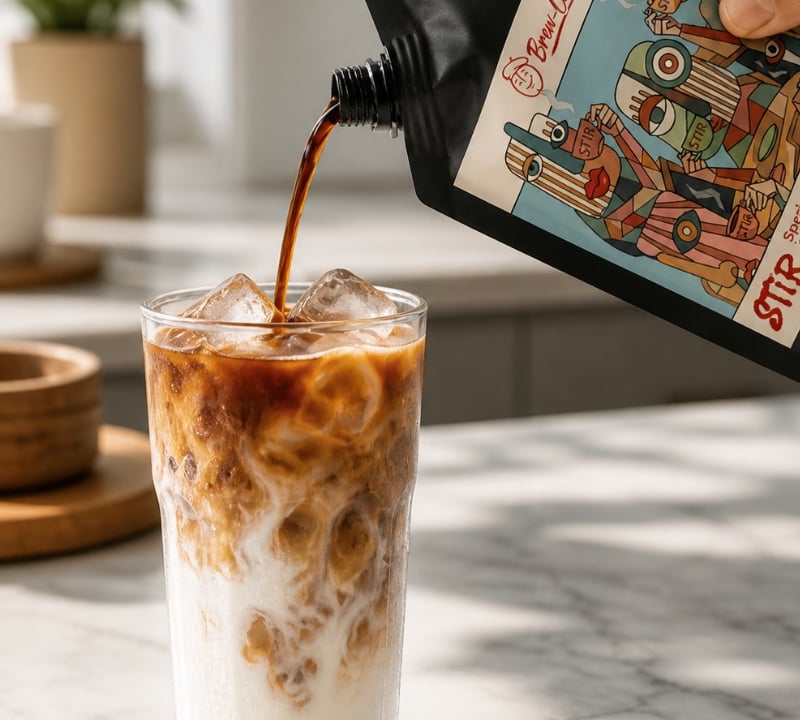
Cold coffee and iced lattes: concentrate wins. It mixes straight into cold milk with no lumps, and you don't need hot water first.
Hot lattes: both work. Concentrate tastes closer to a café latte.
South Indian filter coffee: a coffee-and-chicory concentrate tastes much closer to a real decoction than instant does.
Baking and desserts: both work. Concentrate is easier to measure in tiramisu, affogato and coffee cakes.
Cost per cup
Instant coffee usually costs less per cup. Coffee concentrate costs more, but it replaces a café drink, not a jar of instant. At home, a STIR cold coffee costs a fraction of the same drink at a café.
Which should you buy
Choose instant coffee if you want the lowest cost and mostly drink hot coffee with sugar and milk.
Choose coffee concentrate if you want café-style lattes, cold coffee or filter coffee at home without a machine.
Try a concentrate
STIR Speciality is 100% Chikmagalur Arabica with no sugar and no preservatives. Use 20 ml in 150–160 ml of hot or cold milk. For filter coffee, STIR Filter is 80% coffee and 20% chicory. Start with our cold coffee recipe, which takes 2 minutes.
FAQs
Is coffee concentrate stronger than instant coffee? In the bottle, yes. It's meant to be diluted. In the cup, strength depends on how much you use. 20 ml of STIR in 150 ml of milk makes a regular-strength latte.
Can I use concentrate instead of instant in recipes? Yes. Swap a teaspoon of instant dissolved in water for about 20 ml of concentrate, and reduce other liquids slightly.
Can I make dalgona coffee with concentrate? Classic dalgona whips instant coffee with sugar into foam, which liquid concentrate can't do. For the same look and taste with STIR, top iced milk and concentrate with whipped cream: easy dalgona-style coffee.
Does concentrate have more caffeine? Per ml, yes, because it's concentrated. Per cup, it depends on how much you pour.