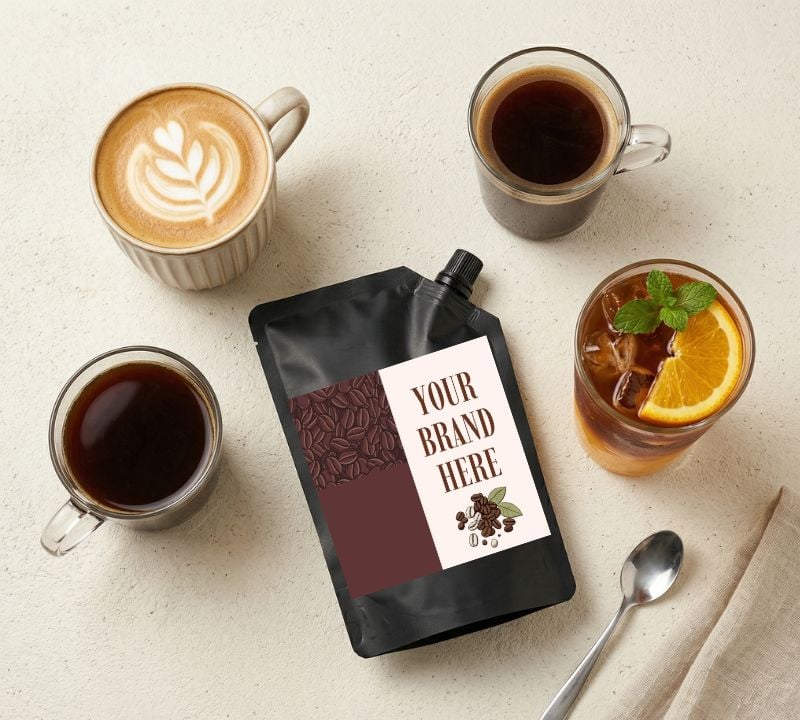
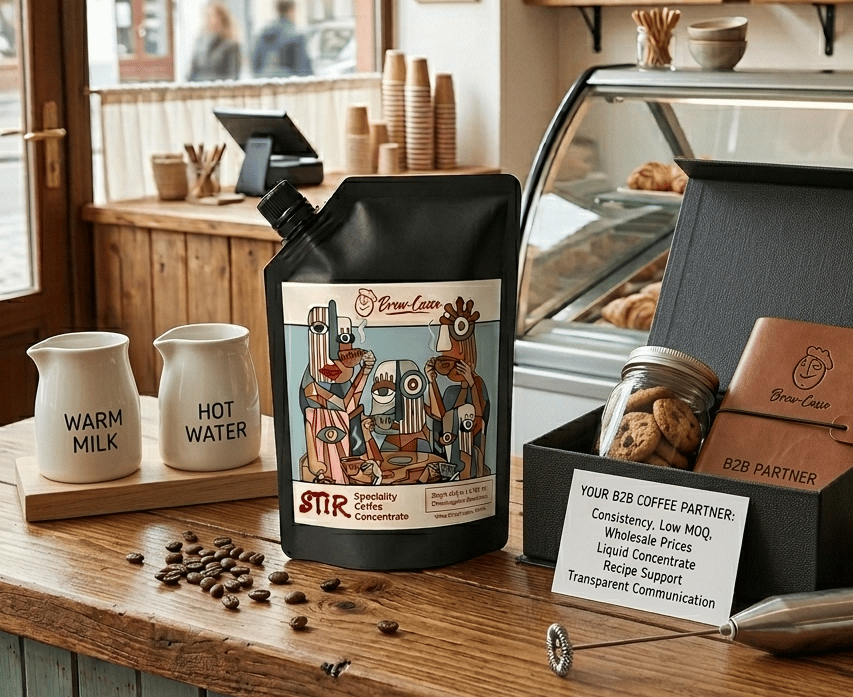
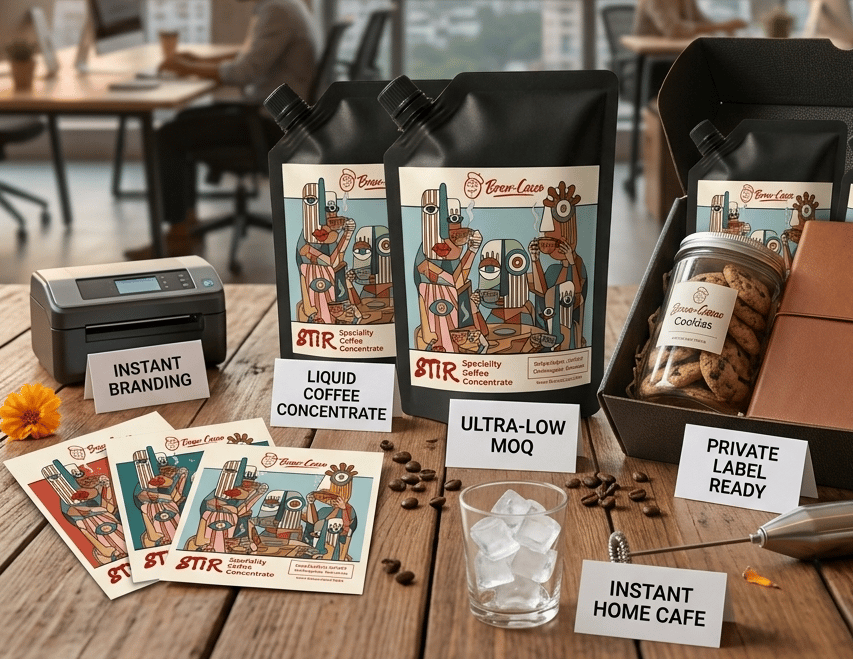
Building a premium brand in India’s competitive beverage space requires balance. Consumers are moving away from traditional mass-market instant options, meaning long-term success relies on offering premium quality and traceability. At the same time, building custom processing units or extraction factories requires heavy capital expenditure (CapEx) and brings long timelines and regulatory hurdles.
For direct-to-consumer (D2C) brands, hospitality groups, and growing retail labels, the path to scaling quickly is outsourcing production. Partnering with a specialized white label coffee supplier allows you to leverage expert manufacturing while focusing entirely on your brand equity, marketing, and distribution channels.
Choosing the right white label coffee partner is a major operational decision. Your partner shouldn't just be an anonymous third-party packer; they need to function as an extension of your supply chain, ensuring product consistency, compliance, and strong gross margins.
Self-Owned Manufacturing Strategy | Strategic White-Label Framework |
High Capital Expenditure (CapEx) | Zero Machinery Investment (CapEx) |
Complex Regulatory Clearances | Turnkey Compliant Infrastructure |
Raw Material Sourcing Risk | Direct-from-Estate Supply Chain |
Staffing & Labor Vulnerability | Standardized Production Cycles |
Long Time-to-Market (6-12 Months) | Fast Market Entry (<30 Days) |
De-risking the Supply Chain with an Estate-Driven Infrastructure
The biggest risk in a private-label coffee business is flavour drift. If your supplier sources beans from changing open-market brokers, your product's flavour profile will shift with every batch.
A reliable white label coffee supplier should maintain clear control at the farm level. By working with suppliers that use a partner-estate model, sourcing single-origin Arabica from dedicated farms in premier growing regions like Chikmagalur, you lock in consistency right from the soil. Processing the harvest directly at the estate level into a stable liquid concentrate ensures your brand delivers the same bold, chocolatey taste profile across every production run.
The Technical Requirements for a Liquid Coffee Partner
Liquid coffee concentrates represent the next wave of FMCG growth. Unlike dry powders, liquid extraction is a delicate science that demands advanced technical oversight:
Micro-Filtration Processes: Ensure your supplier utilizes multi-stage sediment filtration. This completely removes fine particles, leaving a smooth liquid base that emulsifies perfectly with milk or syrups without settling.
Clean-Label Formulations: Modern consumers scan ingredient lists closely. Your white label coffee partner must deliver full flavor extraction without relying on chemical thickeners, artificial corn syrups, or heavy synthetic preservatives.
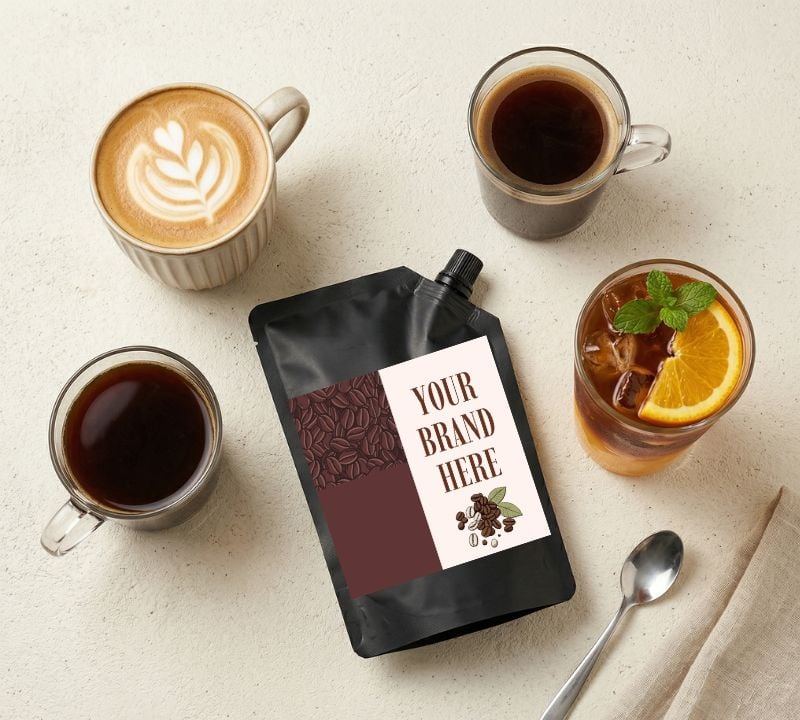
Oxidation Control: Oxygen degrades liquid coffee aromatics quickly. Look for suppliers utilizing high-barrier packaging systems, such as multi-layered black spout pouches, which block UV light and oxygen exposure to preserve freshness for a full year.
Financial and Logistical Efficiency
A true manufacturing partnership should actively protect your cash flow.
By removing intermediaries, an estate-integrated supply chain lets you secure healthy gross profit margins of 50% to 60%. This leaves ample room to fund customer acquisition campaigns, run retail promotions, or absorb modern trade listing fees. Furthermore, selecting a partner that offers compact packaging streamlines your shipping costs and storage needs across third-party logistics networks.
Conclusion: Move Quick, Stay Asset-Light
In an era where fast shipping and quick-commerce channels dominate retail, speed to market is everything. Don't let manufacturing bottlenecks slow your growth. Partnering with an estate-backed wholesale expert allows you to scale up seamlessly. Contact our enterprise production division to review dynamic batch configurations and secure testing samples on our B2B Solutions Page.